Reflecting on Growth

By Daniel E. Lozano

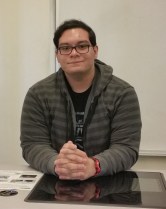
Daniel image

At the end of a semester I like to sit back and look back at how my semester went. But when looking back this time I realized I saw something interesting: I saw growth. Not just in the class I worked with, but in myself as well.

I saw the group grow over the whole semester by starting with smaller interactions between each other, asking a few questions at a time and gradually break the silence in the room. At the start everyone was nervous and shy, much like I was when I started. At first, when they met me, they weren’t quite sure how to approach me. They saw me on par with the professor I was working with. It felt weird at first, but to break the ice I decided to start asking questions that freshmen ask frequently. I wanted to convey that I’m a student as well and no questions are bad questions.

As the semester went on, I saw everyone slowly warm up. They started sitting in more tightly knit groups, then eventually just started to work as an entire class. It was a great feeling seeing that happen.

Then I realized, I also grew a bit too. I was a bit nervous just like them, but I was also trying to do my best. I thought about the stories the other peer mentors have shared with me and thought about what I learned from them. Personally, standing in front of a group of students wasn’t always my forte’, which is kind of ironic that I’m a peer mentor who stands at the front helping the professor conduct class.

I learned how to work through my own personal flaw by doing something I enjoy: helping people. My first few classes with the group at the beginning of the semester were interesting because much like they were, I was nervous. But as time went on I started to become feel more comfortable. Students were approaching me after class asking questions about facilities as well as saying, “Hey!” whenever they would spot me on campus. It’s a great feeling knowing that they feel I’m someone they could approach to ask questions and chat with.

So looking back at last semester was helpful because not only did I see growth in the class, I also saw it in myself and with that I was able to take a positive attitude into this semester’s course where I have been more proactive with students and glad to have office hours in which if need be, they could visit me to discuss class or even have a friendly chat.

For that I’m glad to be a peer mentor and I look forward to seeing how this semester’s class grows as well.


Daniel E. Lozano is beginning his second semester as a Peer Mentor for the Opening Doors Learning Communities at Kingsborough Community College.
It’s OK to Say No

By Daniel E. Lozano

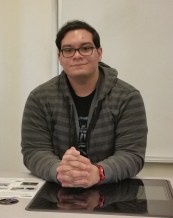
Daniel image

In my personal experience being a student, a tutor, and now a peer mentor, I often have to deal with a lot of things on my plate. This usually leads into a grand balancing act where I have to prioritize different tasks that were tossed my way. So let me be frank: it’s okay to say no.

Now, saying no is a hard thing to do. If you’re a person who likes to help others like myself, saying no almost feels like you’re letting them down. But fear not, that’s not always the case. From the perspective of a student, you sometimes have to say no because you simply can’t do everything. Not being able to do everything is a big ditch we fall in frequently because we typically want to be able to help as many people as we can. But let’s be realistic, a student already has a lot on their plate to begin with. Balancing projects, grades, homework and more are already a lot to deal with. But when someone comes by to ask, “Could you do this for me?” naturally they consider it giving a non-answer, “Maybe.”

From the perspective as a tutor, saying no is key in teaching students. There’s a method to my madness and it’s quite simple. When tutoring, a frequent question I would get was “Can you answer this for me?” or “Can you write my paper?” and my favorite statement “Just do it for me.”

The answer is no. No, because I find it morally wrong to be doing someone else’s work. That and it’s destroying the point of the tutor. The tutor is supposed to help the student better understand the material. I did this by leading my students to the answer. “I won’t tell you the answer because you won’t learn. But, I can help you find the answer and tell you if it’s right,” was something I had to explain to my students. So saying no as a tutor helps students learn to not be dependent on you for information.

Lastly, as a Peer Mentor, scheduling is key, and saying no is something that is required. Helping peers is a great thing and helping out students in my class is always refreshing. I like how after class some students feel they want to ask me questions either about campus or about being a peer mentor. But the most important thing about being a peer mentor besides being there for your students, is time management. Time management is one of the topics we cover in the Student Development course that I mentor, and it was interesting to see how the class reacted to different methods of time management. Some said they kept journals to keep dates written, others set alarms on their phones. Heck, some even wrote on their hands their daily tasks. As for myself, I write notes to myself and put them in places I know I will check later to keep myself updated. Another method I like to use is making lists. On these lists I write what I have to do and the time frame I need to do it. This is how I keep my schedule balanced. However much like being a student or a tutor, you have to say no sometimes.

Since I’m a student and a mentor my schedule is very blocked and any free time I used to de-stress. As a result, in my free time people usually try to throw extra work my way. Now I usually don’t mind helping my friends by revising their papers or explaining concepts to them, but there are times where I just have to say no. Because my plates are getting too heavy and this waiter isn’t going to break some dishes.

The moral of the story is self-explanatory. It’s okay to say no. Sure, sometimes that’s not an option but in times that you can choose, you can say no if you’re already over loaded. You don’t want to burn the candle at both ends because then you burn yourself out in turn. Stress is something that is a serious thing that we try to keep in check. In short, don’t feel bad if you can’t help someone. It’s not the end of the world.

Daniel E. Lozano is a second semester freshman majoring in Media and a Peer Mentor for the Opening Doors Learning Communities at Kingsborough Community College.